Subscribe & get the latest news in your email

By
January 14, 2026
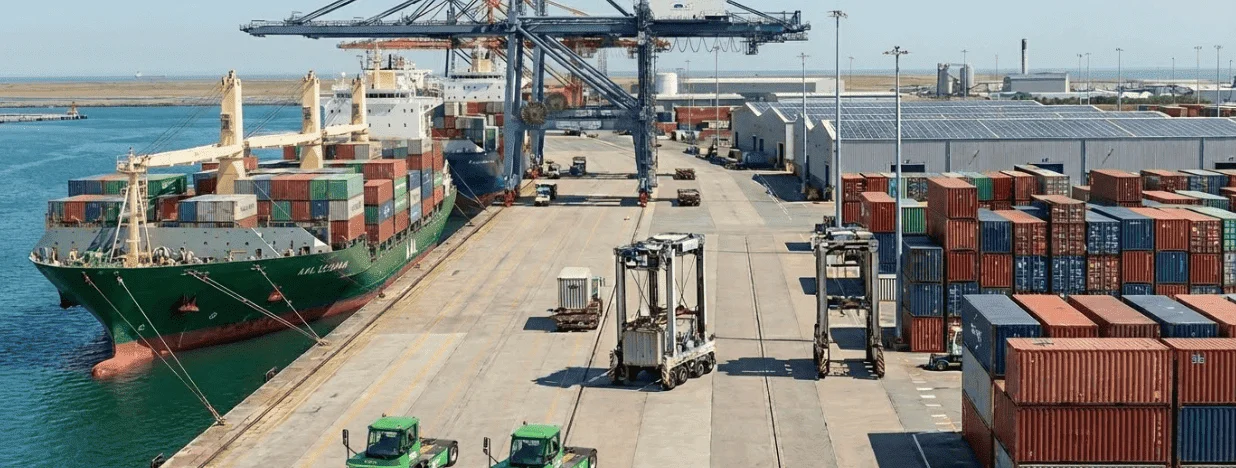
Port electrification is rapidly becoming a cornerstone of sustainable global logistics. As ports face increasing pressure to reduce emissions, improve air quality, and lower operating costs, electrifying port equipment has emerged as one of the most effective solutions. Many of the world’s leading ports are already transitioning to electric alternatives—and most modern ports will eventually electrify all core operations.
Port operations rely on a wide range of heavy-duty equipment, much of which is now available in electric or hybrid versions. The most commonly electrified port assets include:
Terminal tractors (also known as yard trucks) move shipping containers across the port, cargo yards, and logistics terminals. These vehicles operate continuously and are ideal candidates for electrification due to predictable routes and high fuel consumption in diesel-based fleets.
A straddle carrier is a large vehicle used in ports and logistics yards to lift, stack, and transport shipping containers by straddling them and carrying the load beneath its frame. Electric straddle carriers significantly reduce emissions and noise while maintaining high operational performance.
Port cranes are used in maritime terminals to efficiently load and unload heavy cargo—primarily shipping containers—between ships, trucks, and storage yards. Electrified ship-to-shore cranes and yard cranes are already widely adopted and deliver substantial energy and maintenance savings.
Shore power allows ships to plug into the local electricity grid while docked, enabling them to shut down onboard diesel generators. This power can also be used to charge ship batteries. Shore power dramatically reduces emissions, noise, and fuel use in port areas.
Most modern ports either already operate—or are actively planning to operate—all of the above electric systems.
Ports are typically located near densely populated urban areas. Emissions from diesel-powered port equipment directly impact local air quality and public health. In addition, ports and shipping are among the largest contributors to global greenhouse gas (GHG) emissions.
The transportation sector accounts for approximately 24% of global energy-related GHG emissions, making port electrification critical not only for local environmental improvement but also for achieving global climate targets.
Most port operators recognize this and have embedded decarbonization strategies into their long-term planning. While environmental benefits are often highlighted as the primary driver, the economic advantages of electrification are equally compelling.
In many countries:
As a result, electric port equipment often delivers a lower total cost of ownership (TCO) compared to fuel-based alternatives.
Despite strong ambition, port electrification often progresses slowly due to three major challenges:
Among these, power availability and grid capacity are often the most significant bottlenecks.
Electrifying port equipment typically happens on existing port infrastructure. Electricity is usually generated elsewhere—via solar, wind, or other sources—and transported to the port through grid lines, transformers, and substations.
As power demand increases, the local grid can become a limiting factor. In many cases, it is simply not possible to add more power capacity without major grid upgrades. These upgrades often:
Over the past years, Ampcontrol has developed leading technologies to support electrification projects across heavy-duty industries, with ports being a key focus area. Ampcontrol is a core member of the ZEPA (Zero Emission Port Alliance)—established by APM Terminals (Maersk) and DP World—reinforcing its commitment to accelerating zero-emission port operations worldwide.
At the heart of Ampcontrol’s offering are its Energy Management System (EMS) and the AmpEdge controller, which together enable port operators to:
These technologies allow ports to electrify at scale—without compromising operational reliability or incurring unnecessary grid upgrade costs.
To address the technical, operational, and grid-related challenges of port electrification, Ampcontrol follows a structured, phased implementation approach. This ensures fast time-to-value while enabling long-term scalability.
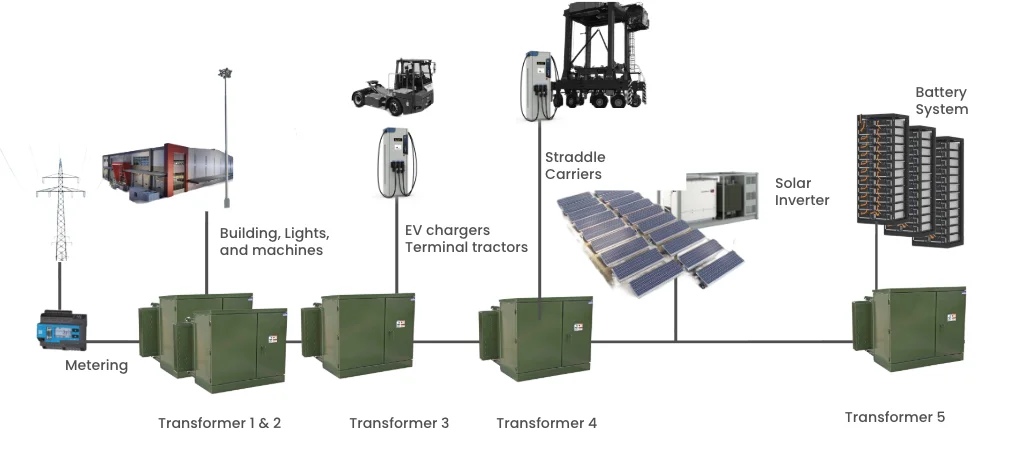
In the first phase, Ampcontrol deploys a local microgrid architecture using its proprietary hardware to manage energy flows across the port. All energy assets are connected locally via the AmpEdge controller, supported by a secure networking solution to ensure reliable and resilient data communication.
The AmpEdge controller is designed to operate fully offline if required, ensuring uninterrupted operation even without internet connectivity. When connected, it securely links to the Ampcontrol Cloud, enabling centralized monitoring and advanced optimization capabilities.
The primary objective of Phase 1 is visibility. Ampcontrol monitors energy and power consumption across all connected assets to:
This data is continuously available in real time and is also used to generate alerts in case of outages, anomalies, or unusual behavior—supporting both operational reliability and long-term planning.
.avif)
Once full visibility is established, Ampcontrol enables intelligent load management, also referred to as energy management. In this phase, power is dynamically distributed across electric equipment to ensure that not all assets draw peak power simultaneously.
By coordinating charging and energy usage, ports can significantly reduce their maximum power demand without affecting daily operations. For example, smart charging of terminal tractors can stagger charging sessions, lowering peak loads while maintaining asset availability.
This phase leverages the existing AmpEdge controllers and communication infrastructure, meaning no additional hardware installation is required. After training, port operators retain full control of the platform, with the flexibility to adapt strategies as operations evolve.
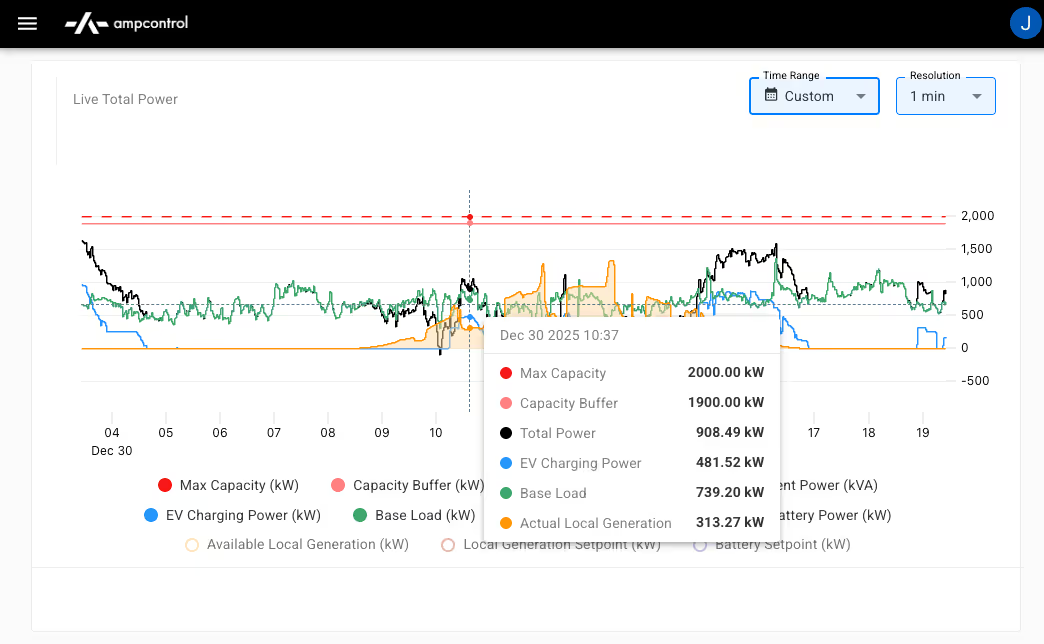
In the third phase, Ampcontrol expands optimization capabilities to include on-site generation, battery energy storage systems (BESS), and power purchase agreements (PPAs).
Ampcontrol’s energy management platform continuously measures both uncontrolled loads and optimized energy flows across EV chargers and BESS. Batteries are intelligently charged during:
Stored energy is then discharged during peak demand periods, reducing strain on the grid and eliminating the need for costly infrastructure upgrades. The system also prioritizes the use of self-generated renewable energy, which directly lowers monthly energy costs.
On-site generation refers to power sources located at the port or connected via dedicated power lines, increasing available power without full dependence on the public grid. Generation options include:
Combined with battery energy storage, these solutions stabilize energy supply, absorb peak loads, and significantly improve the resilience and sustainability of port operations.
Ports have an exciting—but challenging—future when it comes to fueling and operations. They have fascinated me since childhood, and being able to work with leading port operators on electrification and automation is a key motivation for me and our team.
Joachim Lohse, CEO at Ampcontrol
Some of the world’s largest ports are already well underway with electrification initiatives. Ports such as Rotterdam, Port of Long Beach, and Port of Malta have deployed electric terminal tractors, cranes, and shore power systems.
At Ampcontrol, we are excited to support the ports of the future—helping operators reduce CO₂ emissions, lower operating costs, and enable sustainable transportation at a global scale.

Ampcontrol is a cloud-based software that seamlessly connects to charging networks, vehicles, fleet systems, and other software systems. No hardware needed, just a one-time integration.