Subscribe & get the latest news in your email

By
Joachim Lohse
September 15, 2026
The first depot is a project. The twelfth is an operation.
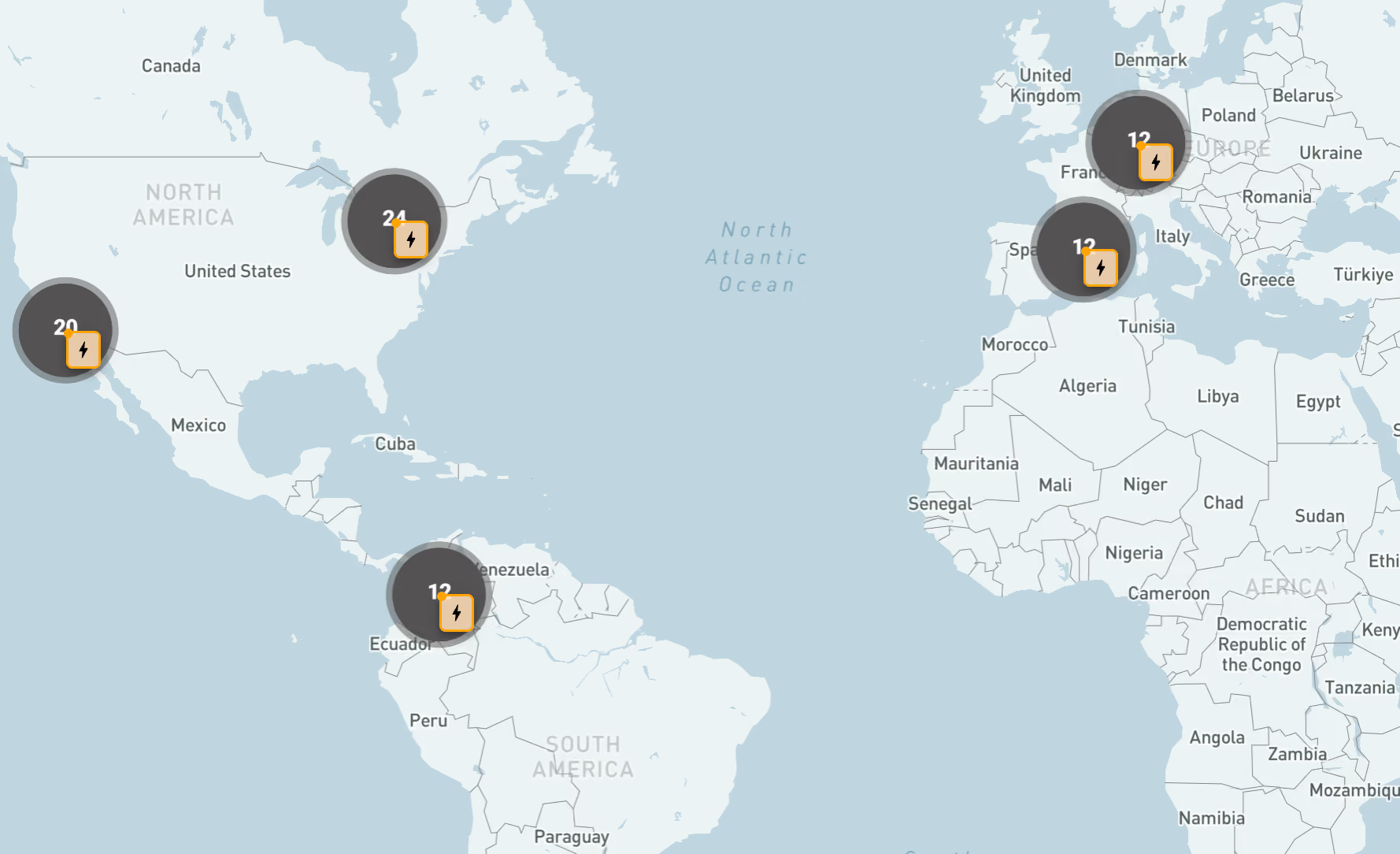
Most charging portfolios grow the same way. One site gets built, proven, and handed to a team that learns it inside out. Then a second site opens in another region, with a different utility, a different charger brand, and a different facility manager. By the time there are ten or twelve, nobody can answer a simple question — how is the portfolio doing this morning? — without opening several browser tabs, exporting three CSV files, and calling two people.
This is the point where multi-site EV charging management stops being a tooling preference and starts being a constraint on how fast you can grow.
The failure modes of a portfolio are not the failure modes of a depot, scaled up. They are different problems.
You lose the ability to walk over and look at it. At a single site, a faulted charger gets checked by someone who is already in the yard. Across twelve sites, that same fault is a dispatch decision: who goes, when, and is it even worth a truck roll? Without remote diagnostics and logs, every fault defaults to the most expensive response.
Routine work becomes a coordination problem. A firmware update on one site is a maintenance window. The same update across a portfolio means sequencing it around twelve different operating schedules, confirming twelve rollbacks, and tracking which sites are on which version. Done manually, this is where portfolios quietly drift into inconsistent configurations.
More people are involved, and none of them see the same thing. Facility teams, site operators, dispatchers, energy managers, and a central EV expert all touch the same assets with different needs and different permissions. Multiply that by a dozen locations and access management becomes its own workload.
This is the part that surprises teams who assume a second site is a copy of the first.
Grid connection capacity, building load, local solar generation, and on-site battery storage differ from location to location. One depot might have 1 MW of available grid power plus another 2 MW from solar and a battery energy storage system. The next might have 500 kW, no generation, and no storage at all. One is effectively a microgrid to be optimized; the other is a hard ceiling to be respected.
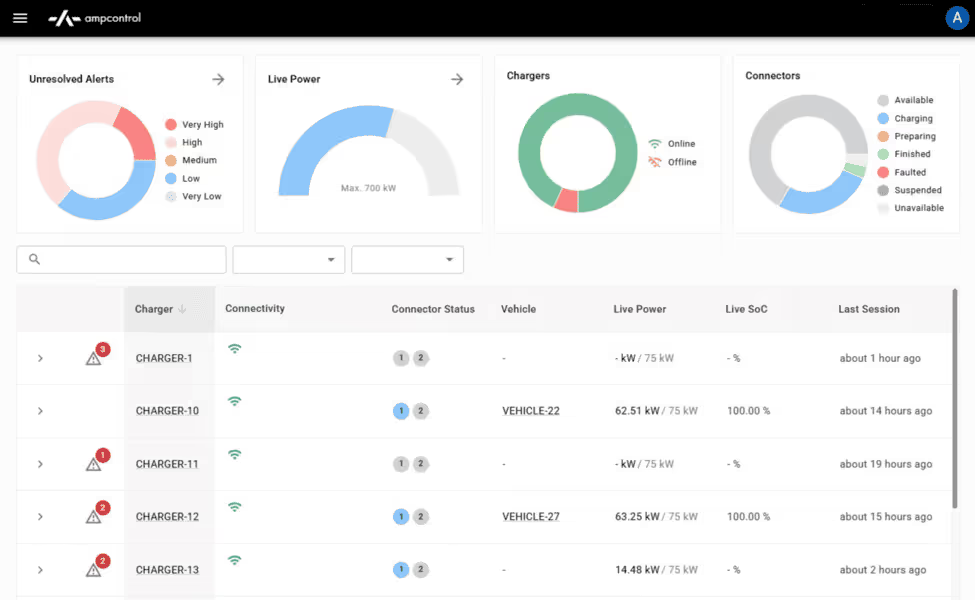
The commissioning, the control logic, and the failure modes are fundamentally different at those two sites. What should not be different is how an energy manager sees them. Both belong on the same dashboard, with the same metrics, the same alerting, and the same reporting — even though what happens underneath is not remotely the same.
When that abstraction is missing, energy managers end up maintaining a mental model per site. That does not scale past the number of sites one person can hold in their head, which in practice is about three.
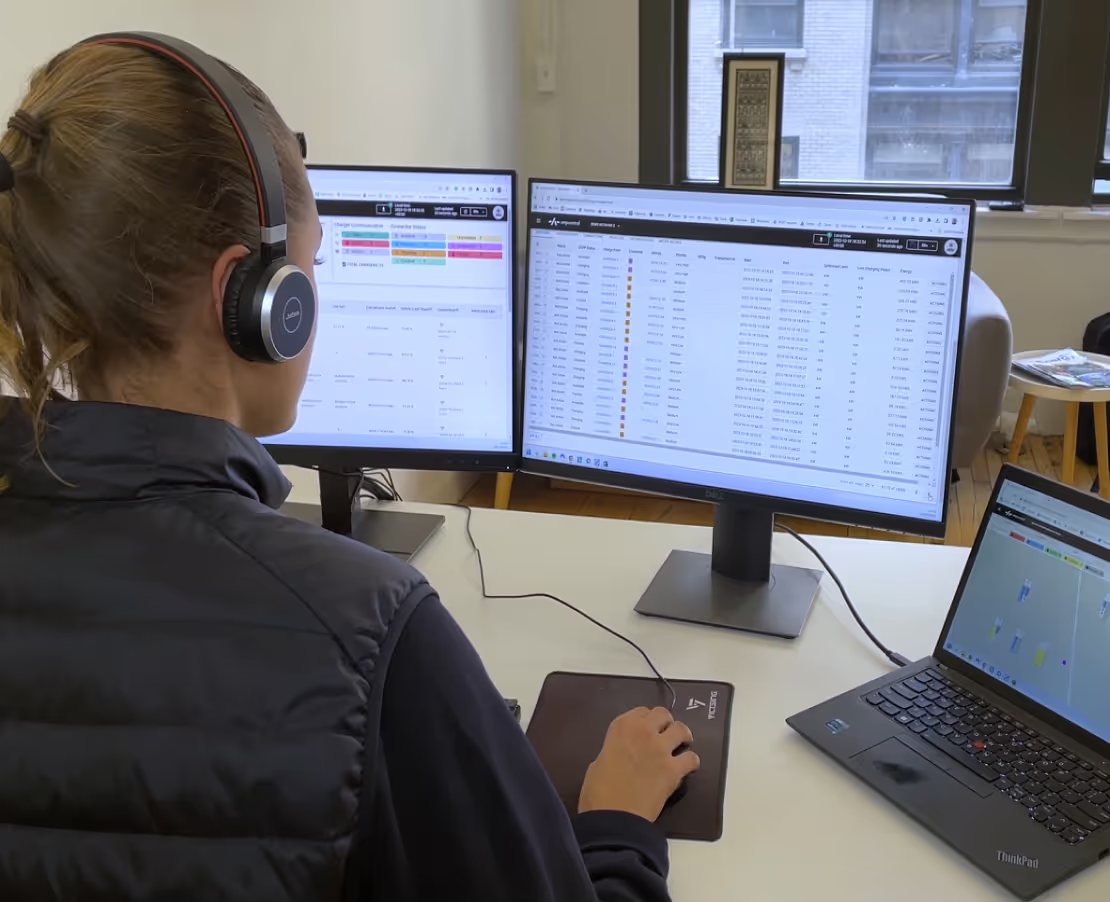
Fleet dispatchers are usually responsible for the entire fleet, or for a region within it. Their scope rarely lines up neatly with a single depot boundary — vehicles move, routes cross sites, and a vehicle that charges at one location may run a route that ends at another.
What a dispatcher needs is one overview containing planned charging sessions, real-time telematics, and planned routes together. When that view doesn't exist, the coordination gets pushed down to ground staff and drivers, who have the least visibility into future trips and the least context on the bigger picture. The result is predictable: vehicles leave with the wrong state of charge, chargers sit idle during cheap energy windows, and the person best placed to fix it finds out afterwards.
Assets need maintenance, updates, and troubleshooting. But deep EV charging expertise is still rare inside fleet and logistics organizations. In most companies it lives with one or two people who are expected to cover every site.
For them, a central dashboard is not a convenience — it is the only way the job is possible. They need logs, alerts, firmware updates, and remote actions in one place, and it has to work across brands and across asset types: chargers, inverters, meters, and controllers. A tool that only covers one manufacturer just moves the tab-juggling problem somewhere else.
If you are evaluating platforms, these are the capabilities that separate a genuine portfolio tool from a single-site tool with a site selector bolted on:
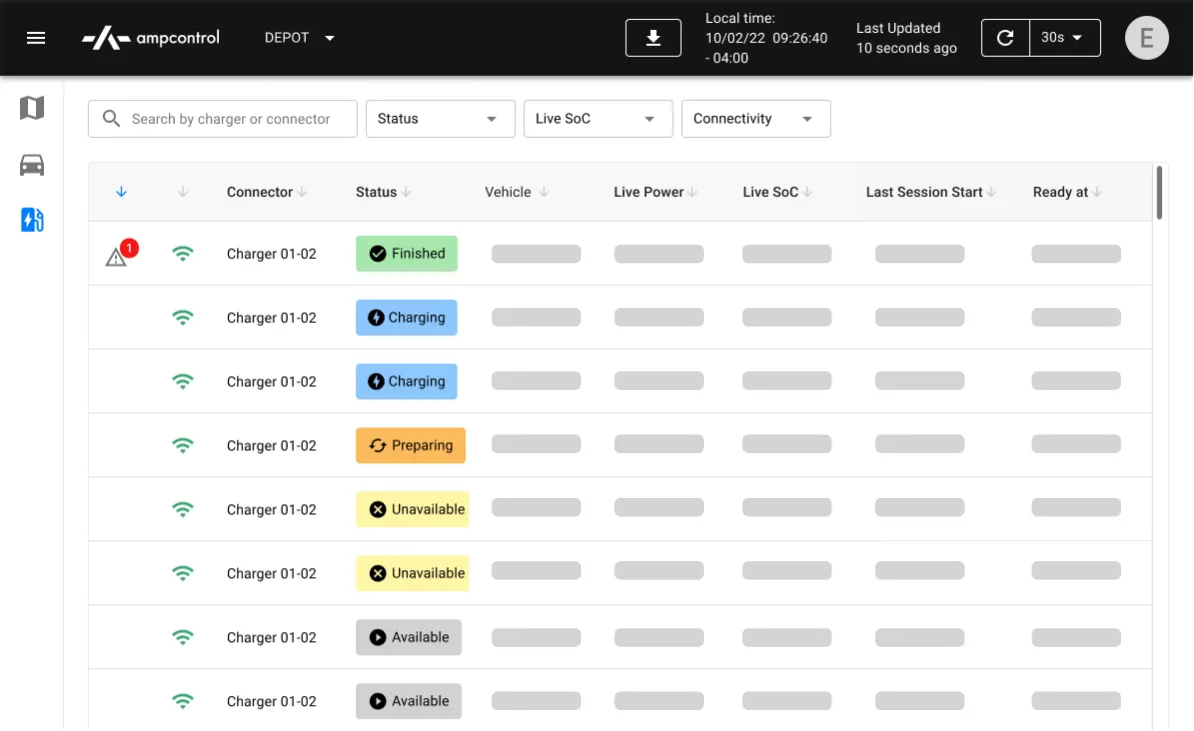
Site-level energy control, one operating picture. Energy managers configure constraints and energy objectives per site — grid limits, load, generation, storage. A site with a microgrid and an AmpEdge controller is monitored the same way as a site with nothing but chargers, so the portfolio view stays consistent even when the underlying infrastructure isn't. That includes one central monitoring layer for every asset, regardless of brand or type.
AutoScheduler connects the fleet side to the charging side. Ampcontrol AutoScheduler integrates with existing TMS and telematics systems, so vehicle, route, and charging data exchange automatically rather than being re-keyed. Dispatchers get a single overview across all sites, including a central alert system — which is what makes it possible to manage charging around routes instead of the other way around.
Access and bulk actions that match your org chart. IT administrators define custom roles for the company. A site operator sees the chargers at their site; a company-wide EV charging expert sees every charger at once and can run bulk updates across the portfolio. SSO and role-based access keep that clean as headcount and site count grow.
Reporting that doesn't require a spreadsheet. Weekly and monthly asset reporting and the report center produce portfolio and per-site views without manual reconciliation.
Any two of these usually mean the portfolio is being held together by individual effort. That works until someone takes a holiday.
What is multi-site EV charging management? It is the practice of monitoring, controlling, and reporting on charging infrastructure across several locations from one platform — covering energy constraints, asset health, access permissions, and fleet coordination, rather than managing each depot as a standalone system.
Can one platform handle sites with very different energy setups? Yes, provided constraints and objectives are configurable per site. A site with solar and battery storage needs different control logic than one with a fixed grid limit, but both can be presented and reported on identically.
Does it work with chargers from different manufacturers? It should. Mixed-vendor portfolios are the norm, and a platform that only manages one brand recreates the problem it was meant to solve.
How does this relate to fleet operations? Charging is a fleet constraint, not a facilities one. Integrating telematics, routes, and schedules is what lets dispatchers plan around vehicle availability instead of reacting to it.
Scaling past your first depot? Book a demo to see the portfolio view with your own sites.

Ampcontrol is a cloud-based software that seamlessly connects to charging networks, vehicles, fleet systems, and other software systems. No hardware needed, just a one-time integration.