Subscribe & get the latest news in your email

By
Joachim Lohse
May 10, 2026
For the past 15 years, Fleet Management has been defined by a singular goal: maximizing profitability through route and freight optimization. Industry giants like DHL, Walmart, and Lidl, alongside major transit bus operations, have spent over a decade perfecting the art of the "most efficient mile."
By integrating sophisticated Transportation Management Systems (TMS) and route planning tools, companies have automated the chaos of daily logistics into a streamlined, reliable service. However, as the industry shifts toward electrification, the goalposts are moving. It’s no longer just about the route—it’s about the charge.
While public discourse often focuses on the "range anxiety" of long-haul passenger trips, professional fleet operations face a different reality. For the majority of logistics hubs and bus depots, the operation is return-to-base or point-to-point.
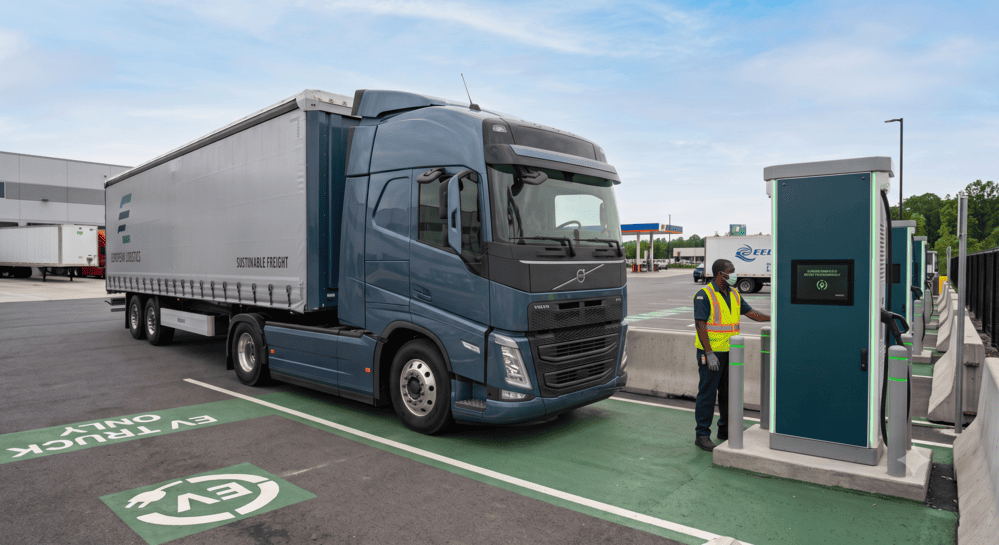
Fleet operators are increasingly avoiding public charging hubs like Milence or Greenlane. Why? Because high electricity prices at public stations can easily increase fuel costs by 30%. To maintain the thin margins of the logistics world, operators have realized that maximizing charging at their own depots—where they have stable, predictable pricing—is the only way to make the "EV math" work.
As electric truck and bus operations scale, a new physical bottleneck has emerged. Most distribution centers and depots were not built for massive electrical loads. Facility managers are now facing a daunting reality: insufficient space and limited grid connections.
In recent projects, we have seen companies attempting to charge 50 electric trucks using only 10 charging ports during a 24-hour window. This creates a high-stakes game of "musical chairs" that requires:
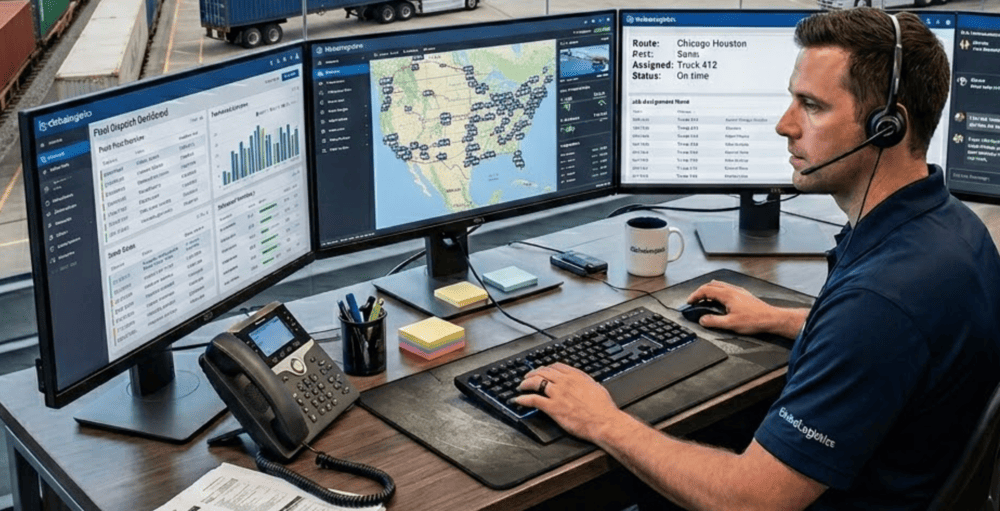
The challenge is that dispatchers are already at their limit. They are managing routes, schedules, driver communication, and third-party logistics (3PL) partners. Expecting a dispatcher to manually plan charging sessions two or three days in advance is unrealistic and prone to human error.
This is where manual processes fail and automation must take over.
To solve this, Ampcontrol has developed the AutoScheduler. This tool essentially merges the world of route planning with the world of charge planning.
The Ampcontrol Cloud acts as a central brain, integrating three critical data streams:
For large distribution centers, bus depots, and ports, systems like the AutoScheduler are becoming mission-critical. To maintain the efficiency gains built over the last 15 years, fleet operators must look beyond the road and start looking at the plug.
By automating the intersection of energy and logistics, companies can scale their electric fleets without outgrowing their infrastructure—or their dispatchers' patience.
Ready to optimize your fleet's charging strategy? Explore how Ampcontrol can streamline your transition to electric.
Ampcontrol is a cloud-based software that seamlessly connects to charging networks, vehicles, fleet systems, and other software systems. No hardware needed, just a one-time integration.