Subscribe & get the latest news in your email

By
Connor Tariche
August 15, 2022

If you live in California, you have probably heard the term Low Carbon Fuel Standard (LCFS) credit for electric vehicles, as they are beneficial for businesses involved in providing fuel for transportation.
In this article, we’ll explain what LCFS credits are, how they work, and how companies can benefit from them.
If you want to learn more about energy management and smart charging, download our new report, "Energy Management 101: How to Efficiently Charge Electric Fleets".
The Low Carbon Fuel Standard is a standard that was enacted into California state law in 2009 and is governed by the California Air Resources Board (CARB).
Since the LCFS was introduced, it has been rolled out across several US states and has the potential to be adopted further.
LCFS credits rely on fuel pathways which means calculating the carbon intensity (CI) of the transportation fuel pool and incentivizing reduction. LCFS credits aim to reduce CI by generating a credit for every metric ton of emissions avoided.
The LCFS credits fuel pathways include the provision of energy efficient EV charging equipment. Other pathways include the provision of hydrogen and compressed natural gas as transportation fuels.
At its core, one LCFS credit equals one metric ton of CO2 reduction.
The system works by setting an annual carbon intensity (CI) target for transportation fuels.
This creates a financial market where deficit holders (obligated parties like oil refiners) must purchase credits from credit generators (clean fuel providers) to remain compliant. For electric fleet operators, this means the energy you dispense to your vehicles is a valuable commodity.
Understanding the mechanics of credit generation is key to maximizing your return. The process generally follows three steps:
A life-cycle analysis (LCA) determines a fuel's Carbon Intensity score. This measures the total Greenhouse Gas (GHG) emissions associated with the fuel, from production to consumption. For example, California uses the CA-GREET model to calculate these scores.
The fuel's CI score is compared to the annual LCFS target set by the regulatory body (e.g., CARB). This target declines over time, requiring fuels to become cleaner each year to generate the same number of credits.
This system incentivizes the supply of cleaner fuels through a simple market rule: Deficit generators (fossil fuel suppliers) must buy credits from Credit generators (clean fuel providers) to balance their books. This transfer of wealth funds further clean energy investments and EV infrastructure.
There are three primary methods through which credits are generated:
While major energy producers play a large role, the market is open to various stakeholders:
Fuel providers must report the volume and type of fuel that they supply to states that are registered in the program.
If the company imports high-carbon fuel, they lose credits. If they import low-carbon or generate renewable energy fuel, then they gain credits.
There is also a financial penalty for importing low-carbon fuels as any company that is in a credit deficit must buy back LCFS credits to offset it.
Businesses that export energy, such as renewable power plants and EV and charging providers, can sell the credits they generate. For example, in 2021 Tesla generated $1.4B revenue through credit sales alone.
The LCFS credit markets are designed to decrease the carbon intensity of transportation fuel pools while incentivizing the adoption of vehicles and equipment powered by cleaner fuel sources within a given state.
Each individual state can control the rules and regulations of its own market and they must be approved by the state’s legislative branch.
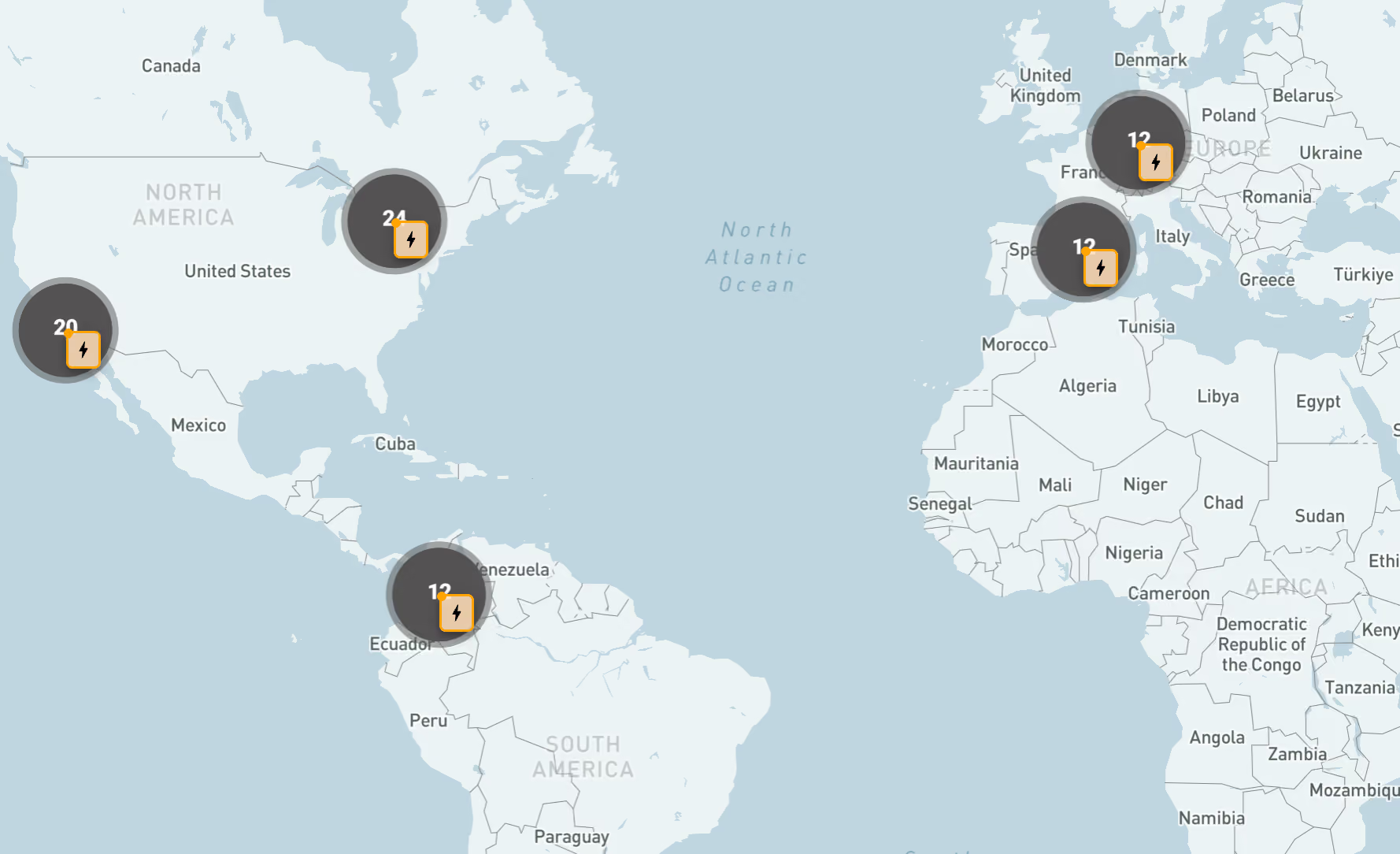
The LCFS landscape is rapidly expanding beyond its Californian roots.
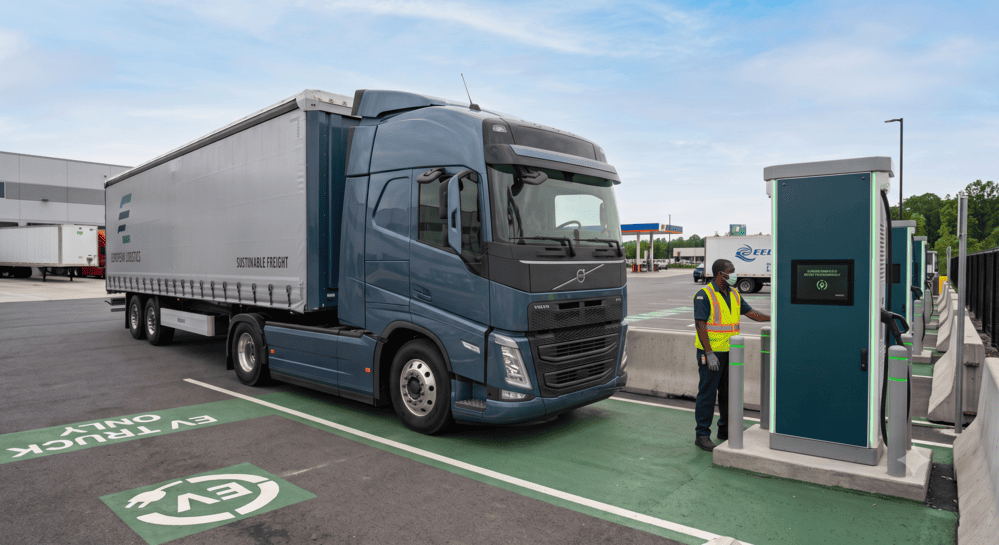
LCFS credits are good news for EV fleet owners, as they are involved in charging EVs which reduces fossil fuel emissions for the state. Credits are generated for each kWh of charged energy. The larger the fleet, the more EVs are charged which generates more credits.
Electric fleet owners and operators are able to monetize their LCFS credits by either:
If you are a charge point operator or own EV supply equipment and you want to set up a credit strategy, then CMS providers such as Ampcontrol can help.
At Ampcontrol, we have reporting tools that allow you to easily manage LCFS credits. In addition, we have partnerships with brokers, who will handle the trading. We also make it easy to pull up all the information you need to monetize the credits.
If you plan to install electric fleet chargers you should consider generating revenue through LCFS. Talk to one of our EV experts, and learn how to increase your revenue stream.
Ampcontrol is a cloud-based software that seamlessly connects to charging networks, vehicles, fleet systems, and other software systems. No hardware needed, just a one-time integration.