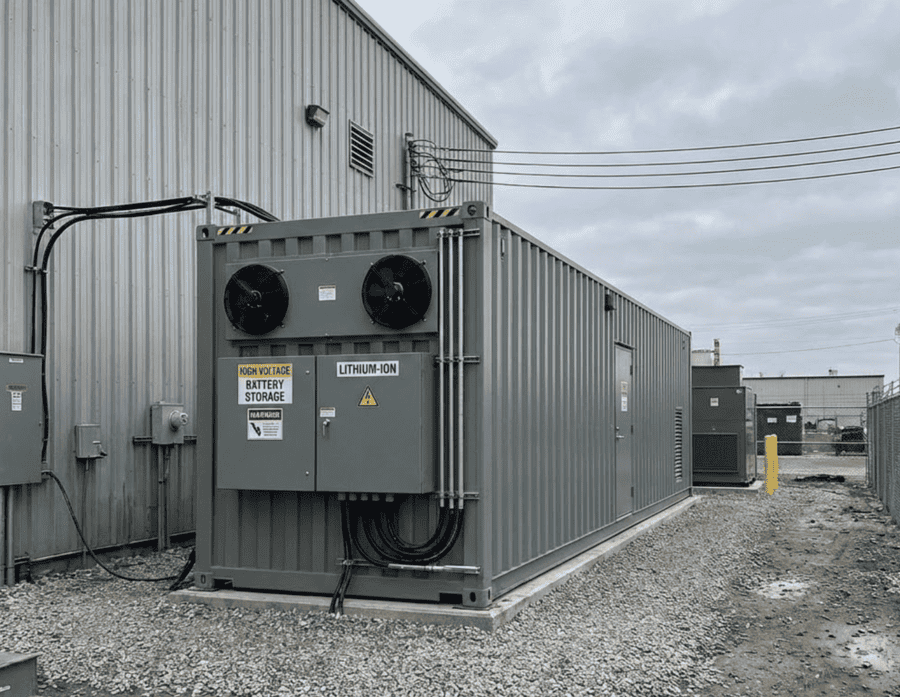
Estrategia óptima de envío de almacenamiento de baterías para su sitio de carga
Un sistema de almacenamiento de energía en baterías es tan valioso como la estrategia detrás de él. Diseñamos el tamaño correcto de BESS, la lógica de envío correcta y la justificación financiera adecuada para su sitio específico, de modo que usted invierte en un almacenamiento que se amortiza solo.
Determina si el almacenamiento en batería tiene sentido desde el punto de vista financiero para tu sitio
El almacenamiento en batería no es la solución adecuada para todos los sitios. Tiene mucho sentido desde el punto de vista financiero cuando la tarifa de los servicios públicos incluye cargos por alta demanda, cuando la conexión a la red es limitada y la actualización es cara o lenta, o cuando se tiene una importante generación de energía solar que actualmente se exporta en lugar de utilizarse. Tiene menos sentido cuando su red no tiene restricciones y su tarifa es plana. Modelamos su perfil de carga específico, su estructura tarifaria de los servicios públicos y su programa de cobros para determinar si BESS acelera su ROI general y en qué medida.
- Modelo de negocio de BESS basado en su tarifa de servicios públicos y perfil de carga reales
- El potencial de reducción de los cargos por demanda se calcula a partir de los datos de su medidor de intervalos
- Comparación del ROI con y sin almacenamiento en paralelo
- Análisis de umbrales que muestra a qué nivel de demanda se vuelve viable el BESS

En todos los sectores



.png)
.png)

.png)
La lógica de envío correcta marca la diferencia entre una buena y una excelente inversión en BESS
La mayoría de los sistemas de almacenamiento de baterías se programan con un programa estático simple: se cargan por la noche y se descargan durante el día. Este enfoque deja un valor significativo sobre la mesa. Una estrategia de despacho optimizada tiene en cuenta la carga del edificio en tiempo real, el cronograma de carga de la flota, la curva de generación solar y la estructura tarifaria de los servicios públicos para determinar exactamente cuándo cargar la batería, cuánto reservar y cuándo descargarla. Para los sitios con tarifas por tiempo de uso o precios dinámicos, esto puede suponer la diferencia entre una amortización de 3 años y una amortización de 6 años con el mismo hardware.
- Comparación entre envíos estáticos y optimizados modelada para su sitio
- Integración del tiempo de uso y los precios dinámicos en la lógica de envío
- Estrategia de maximización del autoconsumo solar
- Validado con 12 meses de datos históricos de carga del sitio

Acumule múltiples fuentes de ingresos con una sola inversión en baterías
Los casos comerciales más sólidos de BESS combinan múltiples flujos de valor del mismo activo, una práctica conocida como acumulación de valores. Un único sistema de baterías puede reducir simultáneamente los picos de demanda, almacenar el exceso de generación solar, proporcionar energía de respaldo durante las interrupciones de la red y, en algunos mercados, participar en programas de arbitraje energético o de servicios de red. Identificamos cada flujo de valor aplicable a su sitio y mercado, cuantificamos cada uno de ellos y mostramos el impacto financiero combinado.
- Valor de reducción del cargo por demanda cuantificado para su estructura tarifaria
- El aumento del autoconsumo solar se modela en función de su perfil de generación
- Servicios de red y flexibilidad: evaluación de la participación en el mercado por mercado
- Potencial de arbitraje energético en el marco de estructuras de precios diarios y al contado

.png)
Carga optimizada para flotas escolares en toda América del Norte
First Student maximiza el ahorro de energía y el tiempo de funcionamiento de los cargadores en las escuelas de Norteamérica

WatTeV logra la excelencia operativa para los sitios de carga de camiones eléctricos
WatTev utiliza el software de Ampcontrol para reducir la demanda total de energía máxima y garantizar una alta disponibilidad de la infraestructura de carga para las flotas.

Revel utiliza soluciones impulsadas por IA para aumentar la eficiencia de la flota
Revel usa el software de Ampcontrol para reducir los costos de combustible y proporcionar acceso público a la carga.

Cómo Takealot y Aeversa logran una reducción de hasta un 65% en los costos de energía
Descubra cómo Takealot y Aeversa logran una reducción de hasta un 65% en el costo de energía para las flotas eléctricas.

La plataforma de Geotab se ha mejorado con soluciones inteligentes de carga para vehículos eléctricos
Geotab Marketplace lidera el camino para conectar la telemática de la flota y la carga inteligente

7Gen ofrece una gestión de carga basada en inteligencia artificial para soluciones llave en mano
7Gen electrifica las flotas canadienses de vehículos eléctricos con el software de gestión de carga Ampcontrol

Automatic Charge of Vehicles Electrical con IA de Electrada
Descubra cómo Electrada utiliza el sistema de gestión automática de carga de vehículos eléctricos impulsado por IA para reducir los costos operativos de sus flotas y clientes en este estudio de caso.
Potencialice sus operaciones con Ampcontrol


Optimice las operaciones de su flota eléctrica


Los indicadores más claros de que el BESS generará una buena rentabilidad en su planta son los altos cargos por demanda máxima en la tarifa de los servicios públicos, una conexión a la red limitada que limita la cantidad de cargadores que puede instalar y una importante generación solar in situ que actualmente se exporta a la red a precios bajos. Si su planta reúne estas tres características, es casi seguro que BESS se amortizará en un plazo de 4 a 6 años. Si su red no tiene restricciones y su tarifa es plana sin ningún componente de carga por demanda, el argumento comercial es más débil y el almacenamiento puede no ser la inversión adecuada en este momento. Nuestra evaluación le dará una respuesta clara basada en sus datos reales y no en una recomendación general.
El tamaño del BESS depende de tres cosas: la cantidad de demanda máxima que quieras reducir, la duración del período de máxima demanda y el tiempo que tenga la batería para recargarse entre las descargas. Un sistema diseñado exclusivamente para reducir la carga de la demanda normalmente necesita cubrir de 1 a 3 horas de reducción de carga máxima, lo que, en el caso de un depósito de tamaño mediano, podría significar un sistema del orden de 500 kWh a 2 MWh. Un sistema diseñado para ampliar la capacidad de la red para cargar vehículos eléctricos debe dimensionarse teniendo en cuenta el requerimiento total de energía para cargar durante la noche y la duración del período de carga. Modelamos ambos casos de uso y recomendamos el tamaño mínimo viable del sistema que permita alcanzar tus objetivos financieros: sobredimensionar una batería es un error común y costoso.
Para los sitios con tarifas de carga por demanda elevadas y conexiones a la red limitadas, los períodos de amortización del BESS suelen oscilar entre 4 y 7 años, según el tamaño del sistema, los precios locales de la electricidad y los incentivos disponibles. Los sitios que también pueden acumular ingresos por servicios de red o recurrir al arbitraje energético (especialmente en los mercados europeos con programas de flexibilidad activos) pueden alcanzar períodos de amortización de 3 a 5 años. Los sitios con estructuras de tarificación por demanda más débiles o redes sin restricciones tendrán períodos de amortización más prolongados y, en algunos casos, el almacenamiento no está justificado desde el punto de vista financiero hasta que se añadan más vehículos o la red sea más limitada. Nuestro modelo le proporciona la cifra exacta de su sitio, en lugar de un rango.
Sí, y esta suele ser una de las configuraciones más valiosas para los sitios de depósito con energía solar en azoteas o toldos. Cuando la batería se integra con el inversor solar y el sistema de carga de vehículos eléctricos a través de una plataforma de gestión de energía como Ampcontrol, puede cargarse preferentemente a partir de la generación solar durante el día, almacenar el exceso de generación que, de otro modo, se exportaría a bajas tasas de alimentación y descargarse para permitir la carga de los vehículos eléctricos por la noche, cuando la generación solar ha disminuido. Esto aumenta el autoconsumo solar in situ (normalmente del 30 al 40 por ciento sin almacenamiento al 70 al 85 por ciento con almacenamiento), lo que reduce directamente el volumen de electricidad de la red que se compra a precios minoristas completos.
Los servicios de red son programas ejecutados por operadores de sistemas de transmisión y distribución que pagan a los propietarios de los activos para que pongan sus cargas flexibles o activos de almacenamiento a disposición para ayudar a equilibrar la red eléctrica. Para el almacenamiento de baterías en los depósitos de las flotas, los programas más relevantes son la respuesta de frecuencia, la respuesta a la demanda y la capacidad de participación en el mercado. Los requisitos y los ingresos varían considerablemente según el mercado: en Alemania, los Países Bajos y el Reino Unido hay mercados bien establecidos en los que las baterías para uso en almacenes pueden generar ingresos significativos. En Norteamérica, los programas de respuesta a la demanda a través de las empresas de servicios públicos son más comunes que los servicios de red a nivel de transmisión para esta clase de activos. Nuestra evaluación identifica qué programas están disponibles en su mercado y modela los ingresos incrementales que agregarían a su modelo de negocio de BESS.
No, y en muchos casos tiene sentido separarlos gradualmente. Un enfoque habitual es instalar primero los cargadores (que funcionan dentro de la capacidad de la red existente mediante una gestión inteligente de la carga) y añadir el almacenamiento de la batería en una segunda fase, una vez que se disponga de entre 6 y 12 meses de datos operativos reales sobre el perfil de carga y los patrones de carga reales. Estos datos reales suelen producir un diseño de dimensionamiento y despacho del BESS más preciso que un modelo puramente teórico. Lo más importante es garantizar que su infraestructura eléctrica esté diseñada desde el principio de forma que se adapte a la futura integración de las baterías (en concreto, que la asignación de espacio entre la centralita y el inversor lo permita), de modo que la instalación de la segunda fase no requiera modificaciones importantes.
