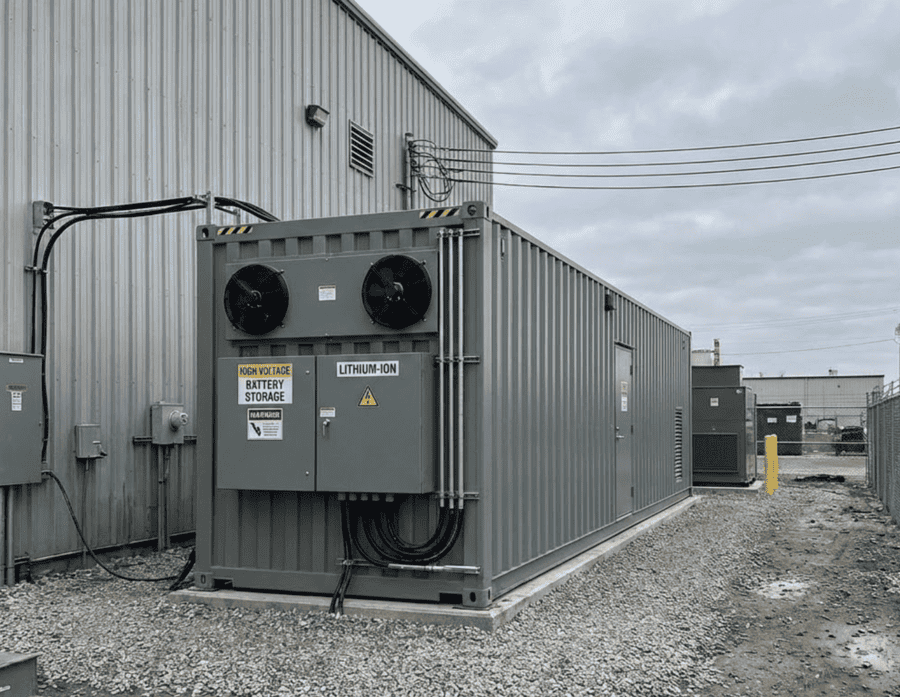
Stratégie d'expédition optimale du stockage des batteries pour votre site de recharge
La valeur d'un système de stockage d'énergie par batterie dépend de la stratégie qui le sous-tend. Nous modélisons la bonne taille de BESS, la bonne logique d'expédition et le bon dossier financier pour votre site spécifique. Vous investissez donc dans un stockage rentable.
Déterminez si le stockage sur batterie est rentable pour votre site
Le stockage sur batterie n'est pas la bonne solution pour tous les sites. Sur le plan financier, il est tout à fait judicieux lorsque votre tarif inclut des frais de demande élevés, lorsque votre connexion au réseau est limitée et qu'une mise à niveau est coûteuse ou lente, ou lorsque vous disposez d'une importante production solaire qui est actuellement exportée plutôt qu'utilisée. Cela n'a aucun sens lorsque votre réseau n'est pas limité et que votre tarif est fixe. Nous modélisons votre profil de charge, votre structure tarifaire et votre calendrier de recharge spécifiques afin de déterminer si BESS accélère votre retour sur investissement global, et dans quelle mesure.
- Analyse de rentabilisation BESS modélisée par rapport à votre tarif des services publics et à votre profil de charge réels
- Potentiel de réduction de la charge de demande calculé à partir des données de votre compteur d'intervalles
- Comparaison du retour sur investissement avec et sans stockage côte à côte
- Analyse des seuils indiquant à quel niveau de charge de demande le BESS devient viable

Dans tous les secteurs



.png)
.png)

.png)
La bonne logique d'expédition fait la différence entre un bon et un excellent investissement dans BESS
La plupart des systèmes de stockage par batterie sont programmés selon un calendrier statique simple : charge la nuit, décharge le jour. Cette approche laisse une valeur significative sur la table. Une stratégie d'expédition optimisée prend en compte la charge de votre bâtiment en temps réel, le calendrier de recharge de votre parc, votre courbe de production solaire et la structure de vos tarifs d'électricité afin de déterminer exactement quand charger la batterie, quelle quantité réserver et quand décharger. Pour les sites proposant des tarifs selon la durée d'utilisation ou une tarification dynamique, cela peut faire la différence entre un retour sur investissement sur 3 ans et un retour sur investissement sur 6 ans sur le même matériel.
- Comparaison des expéditions statique et optimisée, modélisée pour votre site
- Intégration de l'heure d'utilisation et de la tarification dynamique dans la logique d'expédition
- Stratégie de maximisation de l'autoconsommation solaire
- Validé par rapport à 12 mois de données historiques sur la charge du site

Cumulez plusieurs sources de revenus à partir d'un seul investissement dans une batterie
Les analyses de rentabilisation BESS les plus solides combinent plusieurs flux de valeur provenant d'un même actif, une pratique connue sous le nom de value stacking. Un système de batterie unique peut simultanément réduire les charges de pointe, stocker l'excédent de production solaire, fournir une alimentation de secours en cas de panne du réseau et, sur certains marchés, participer à des services de réseau ou à des programmes d'arbitrage énergétique. Nous identifions chaque chaîne de valeur applicable à votre site et à votre marché, quantifications chacune d'elles et montrons l'impact financier combiné.
- Valeur de réduction de la charge de demande quantifiée pour votre structure tarifaire
- Augmentation de l'autoconsommation solaire modélisée en fonction de votre profil de génération
- Évaluation de la participation au marché des services de réseau et de la flexibilité par marché
- Potentiel d'arbitrage énergétique dans le cadre de structures de tarification au jour le jour et au comptant

.png)
Recharge optimisée pour les parcs scolaires en Amérique du Nord
First Student maximise les économies d'énergie et la durée de fonctionnement des chargeurs pour les écoles en Amérique du Nord
Aeversa surmonte les défis du réseau pour la recharge des camions électriques en Afrique du Sud
Depuis août 2022, Aeversa et Ampcontrol garantissent une disponibilité 24 heures sur 24, 7 jours sur 7, des premiers dépôts de flottes de véhicules électriques d'Afrique du Sud, relevant ainsi des défis critiques.
WattEV maximise la disponibilité des chargeurs sur le plus grand site de camions électriques d'Amérique du Nord
Découvrez comment WattEV garantit une disponibilité élevée de la borne de recharge et une expérience de conduite fluide sur le plus grand site de camions électriques d'Amérique du Nord.
Réduire les frais liés à la demande du parc de véhicules de Revel
Découvrez comment Ampcontrol optimise la recharge de la flotte Tesla de Revel, en réduisant les frais de demande mensuels de 45 % et en garantissant que les véhicules sont prêts pour le prochain quart de travail.

WatteV atteint l'excellence opérationnelle pour les sites de recharge de camions électriques
WatteV utilise le logiciel d'Ampcontrol pour réduire la demande totale d'énergie de pointe et garantir une haute disponibilité de l'infrastructure de recharge pour les flottes.

Revel utilise des solutions basées sur l'IA pour améliorer l'efficacité de sa flotte
Revel utilise le logiciel d'Ampcontrol pour réduire les coûts de carburant et fournir un accès public aux bornes de recharge.

Comment Takealot et Aeversa parviennent à réduire leurs coûts énergétiques jusqu'à 65 %
Découvrez comment Takealot et Aeversa parviennent à réduire jusqu'à 65 % le coût énergétique des flottes électriques.
Electrada améliore la disponibilité des chargeurs de véhicules électriques pour l'université Vanderbilt
Découvrez comment Electrada et Ampcontrol améliorent l'efficacité de la recharge des véhicules électriques à l'université Vanderbilt.
Copec Voltex recharge des flottes de bus électriques au Chili
Voltex utilise Ampcontrol pour identifier les véhicules, réduire les émissions de CO2, augmenter la consommation d'énergie renouvelable, effectuer des tests de pré-mise en service et évaluer le matériel.
Gestion dynamique de la charge pour exploiter les sites de recharge pour véhicules électriques
Découvrez comment Ampcontrol optimise les quatre sites de recharge de Fload grâce à une gestion dynamique de la charge, réduisant ainsi les pics de consommation.

La plateforme de Geotab améliorée par des solutions de recharge intelligentes pour véhicules électriques
Geotab Marketplace ouvre la voie à la connexion de la télématique des flottes et de la recharge intelligente

7Gen propose une gestion de la recharge alimentée par l'IA pour des solutions clé en main
7Gen électrifie les parcs de véhicules électriques canadiens grâce au logiciel de gestion de recharge Ampcontrol

Gestion automatique de la charge des véhicules électriques alimentée par l'IA d'Electrada
Découvrez comment Electrada utilise un système de gestion automatique de la charge des véhicules électriques alimenté par l'IA pour réduire les coûts d'exploitation de ses flottes et de ses clients dans cette étude de cas.

Aeversa surpasse la capacité de son réseau grâce à un logiciel de gestion de la charge
Aeversa utilise Ampcontrol pour le flux d'énergie et la surveillance de la disponibilité des chargeurs des dépôts de flottes électriques en Afrique du Sud.
7Gen fonctionne avec une disponibilité du chargeur supérieure à 99 % sur les sites de livraison du dernier kilomètre
7Gen utilise le logiciel de recharge des véhicules électriques d'Ampcontrol pour fournir une assistance de flotte rapide et de haute qualité avec une disponibilité de plus de 99 %.
Aerovolt lance le premier réseau de recharge d'avions électriques du Royaume-Uni
Découvrez comment la solution de recharge en tant que service (CaaS) d'Aerovolt intègre les chargeurs OCPP à des outils d'exploitation personnalisés à l'aide de l'API logicielle de recharge d'Ampcontrol pour les aéroports et les avions électriques.
Dynamisez vos opérations avec Ampcontrol


Optimisez les opérations de votre parc de véhicules électriques


Les indicateurs les plus clairs indiquant que BESS générera de solides rendements sur votre site sont les frais de pointe élevés inscrits dans votre tarif des services publics, une connexion au réseau limitée qui limite le nombre de chargeurs que vous pouvez installer et une importante production solaire sur site qui est actuellement exportée vers le réseau à des tarifs avantageux. Si votre site possède ces trois caractéristiques, BESS sera certainement rentabilisé d'ici 4 à 6 ans. Si votre réseau n'est pas limité et que votre tarif est fixe sans aucune composante de charge de demande, l'analyse de rentabilisation est plus faible et le stockage n'est peut-être pas le bon investissement pour le moment. Notre évaluation vous donnera une réponse claire basée sur vos données réelles plutôt que sur une recommandation générale.
Le dimensionnement du BESS dépend de trois facteurs : le niveau de pointe que vous souhaitez réduire, la durée de la période de pointe et le temps dont dispose la batterie pour se recharger entre les périodes de décharge. Un système conçu uniquement pour la réduction de la charge à la demande doit généralement couvrir une à trois heures de réduction de la charge de pointe, ce qui, pour un dépôt de taille moyenne, peut signifier un système compris entre 500 kWh et 2 MWh. Un système conçu pour étendre la capacité du réseau pour la recharge des véhicules électriques doit être dimensionné en fonction de vos besoins énergétiques totaux pour la recharge nocturne et de la durée de votre fenêtre de recharge. Nous modélisons les deux cas d'utilisation et recommandons la taille minimale viable du système qui permet d'atteindre vos objectifs financiers. Le surdimensionnement d'une batterie est une erreur courante et coûteuse.
Pour les sites soumis à des tarifs de recharge à la demande élevés et à des connexions au réseau limitées, les périodes d'amortissement du BESS vont généralement de 4 à 7 ans en fonction de la taille du système, des prix locaux de l'électricité et des incitations disponibles. Les sites qui peuvent également cumuler les revenus des services de réseau ou l'arbitrage énergétique, en particulier sur les marchés européens dotés de programmes de flexibilité actifs, peuvent atteindre des délais d'amortissement de 3 à 5 ans. Les sites dont les structures de tarification de la demande sont plus faibles ou dont les réseaux ne sont pas soumis à des contraintes bénéficieront de périodes d'amortissement plus longues et, dans certains cas, le stockage n'est pas financièrement justifié tant que le site n'ajoute pas de véhicules supplémentaires ou que le réseau ne devient plus restreint. Notre modèle vous donne le chiffre exact pour votre site plutôt qu'une fourchette.
Oui, et c'est souvent l'une des configurations les plus intéressantes pour les sites de dépôt équipés de panneaux solaires sur les toits ou les auvents. Lorsque la batterie est intégrée à l'onduleur solaire et au système de recharge des véhicules électriques via une plateforme de gestion de l'énergie telle qu'Ampcontrol, elle peut se recharger de préférence à partir de la production solaire pendant la journée, stocker la production excédentaire qui serait autrement exportée à de faibles taux d'alimentation et se décharger pour permettre la recharge des véhicules le soir lorsque la production solaire est en baisse. Cela augmente l'autoconsommation solaire sur site, généralement de 30 à 40 % sans stockage à 70 à 85 % avec stockage, ce qui réduit directement le volume d'électricité du réseau acheté aux tarifs de détail complets.
Les services de réseau sont des programmes gérés par des gestionnaires de réseaux de transport et de distribution qui rémunèrent les propriétaires d'actifs pour qu'ils mettent à disposition leurs charges flexibles ou leurs actifs de stockage afin de contribuer à l'équilibre du réseau électrique. Pour le stockage par batteries dans les dépôts de flottes, les programmes les plus pertinents sont la réponse en fréquence, la réponse à la demande et la participation au marché des capacités. L'éligibilité et les revenus varient considérablement selon les marchés : en Allemagne, aux Pays-Bas et au Royaume-Uni, il existe des marchés bien établis où les batteries destinées aux dépôts peuvent générer des revenus significatifs. En Amérique du Nord, les programmes de réponse à la demande par le biais des services publics sont plus courants que les services de réseau au niveau du transport pour cette classe d'actifs. Notre évaluation identifie les programmes disponibles sur votre marché et modélise les revenus supplémentaires qu'ils ajouteraient à votre analyse de rentabilisation BESS.
Non, et dans de nombreux cas, il est judicieux de les échelonner séparément. Une approche courante consiste à installer d'abord les chargeurs, qui fonctionnent dans les limites de la capacité de votre réseau existant grâce à une gestion intelligente de la charge, et à ajouter du stockage sur batterie dans un second temps, une fois que vous disposez de 6 à 12 mois de données opérationnelles réelles sur votre profil de charge et vos modèles de charge réels. Ces données réelles permettent souvent d'obtenir un dimensionnement BESS et un plan d'expédition plus précis qu'un modèle purement théorique. La principale considération est de vous assurer que votre infrastructure électrique est conçue dès le départ pour permettre l'intégration future des batteries, en particulier pour que l'espace alloué à votre appareillage de commutation et à votre onduleur le permette - afin que l'installation de la deuxième phase ne nécessite pas de retouches importantes.
